

How to choose art lighting without glare
Choosing lighting for art is a balancing act between visibility, atmosphere and preservation. The right setup reveals colour, texture and detail without creating reflections that pull attention away from the work itself. Whether you are displaying an oil painting, a framed print, a sculpture or a glazed photograph, glare-free lighting helps your collection feel intentional and comfortable to view.
Start by identifying the artwork’s surface
The surface of the artwork determines how easily it will reflect light. Glossy varnish, glass, metallic leaf and polished frames can all produce distracting bright spots. Matte paintings, unglazed works on paper and textiles are generally more forgiving, although excessive direct light can still flatten their appearance.
For framed photographs, watercolours and prints behind glass, position the light so it arrives from an angle rather than directly in front of the piece. A reflection is most likely when the lamp, artwork and viewer form a straight line. Moving the fixture slightly higher, lower or to one side can break that alignment.
Oil paintings with a textured surface benefit from a gentle angled beam. Light placed too close to the wall can exaggerate every ridge of impasto, while light placed too far forward may create shadows around the frame. Test the effect from the normal viewing position rather than only from a ladder or directly beneath the fitting.
Use angled light instead of a frontal beam
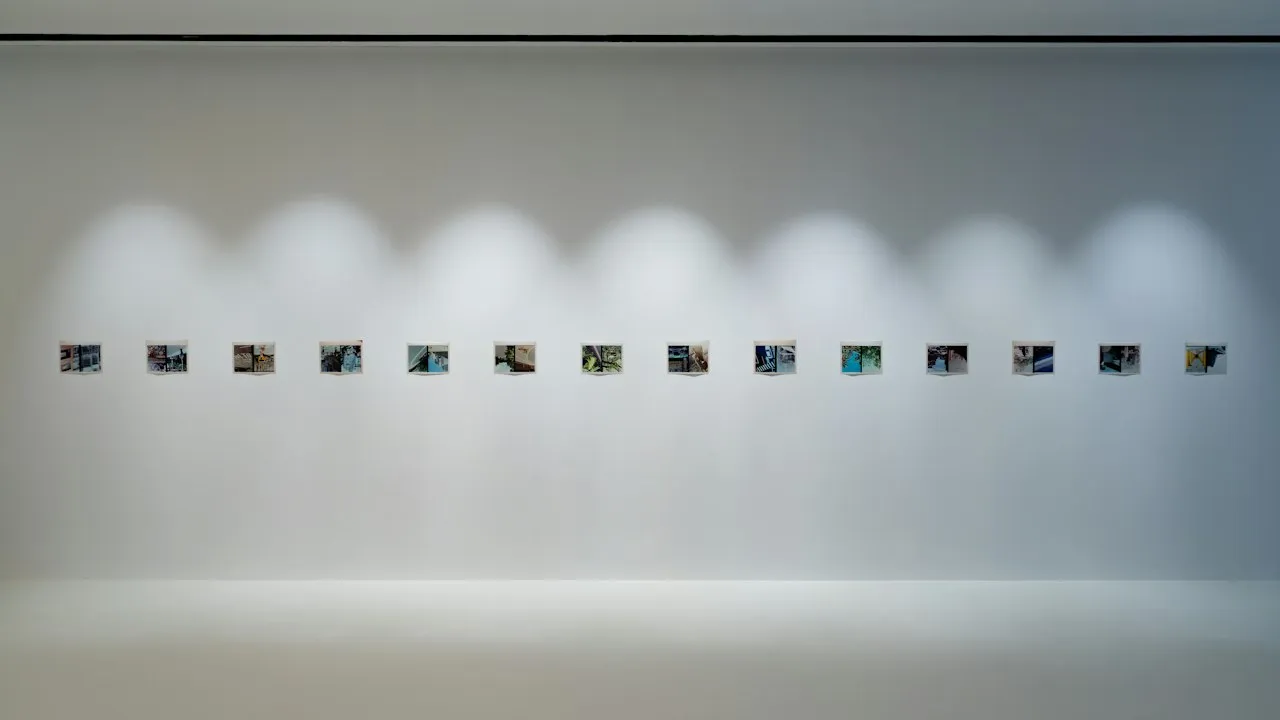
A useful starting point is to direct the fixture at roughly 30 degrees from the wall. This angle provides enough coverage across the artwork while reducing the chance of visible reflections. For very shiny pieces, a wider angle or a fixture positioned farther from the wall may work better.
Track lighting is particularly practical because each spotlight can be adjusted independently. You can turn the head, alter the beam direction and adapt the arrangement when you rearrange the room. Ceiling-mounted adjustable spots also offer flexibility without the more visible appearance of a track.
Picture lights attached above a frame can create an attractive traditional look, but they require careful selection. A short, concentrated picture light may produce a bright strip across the upper part of the artwork. Choose a model with a diffuser, a broad light distribution and a dimming function. If the frame has reflective glass, a picture light may still create glare despite careful placement.
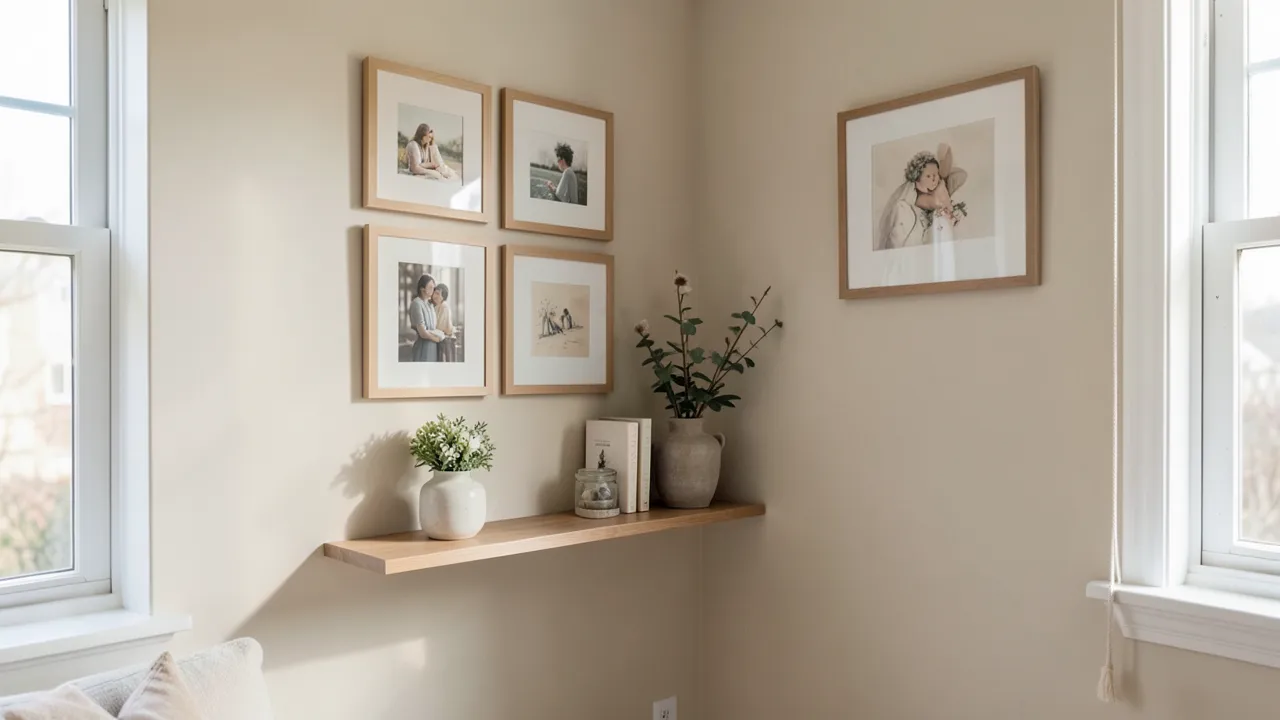
When arranging a compact gallery wall, placement matters as much as the light source. The guidance in How to display art in small spaces can help you leave enough visual breathing room for each work and its illumination.
Select bulbs with controlled colour and brightness
LED lighting is usually the best choice for displaying art at home. Quality LEDs emit very little heat and can be selected for accurate colour rendering. Look for a colour rendering index, often called CRI, of 90 or above. A high CRI helps whites, skin tones, deep blues and subtle pigments appear more natural.
Colour temperature also changes how art is perceived:
- 2700K creates a warm, intimate effect that suits traditional interiors, gold frames and earthy paintings.
- 3000K gives a slightly cleaner warm-white light, suitable for many contemporary homes.
- 3500K can work in bright modern rooms, but may feel too cool beside antique furniture or warm-toned art.
- 4000K and above are often better reserved for task-focused spaces, as they can make domestic displays feel clinical.
Brightness should be adjustable. A dimmable LED lets you lower intensity in the evening and increase it when daylight fades. Begin with a modest level, then raise it only until details become easy to see. Stronger light is not always better, particularly for works on paper, textiles and watercolours.
Control reflections from windows and room lighting
Glare does not come only from art lights. Windows, pendant lamps, table lamps and television screens can all reflect in glazing. Before installing permanent fittings, view the art at different times of day. You may discover that a nearby window creates more distraction than the ceiling light.
If a framed work must hang opposite a window, consider non-reflective or museum-grade glazing. These materials reduce reflections substantially, though they may alter the appearance slightly depending on the product and viewing angle. A blind, curtain or UV-filtering window film can also reduce both glare and daylight exposure.
Keep glossy decorative objects away from the direct path of an art spotlight. Glass vases, mirrors and polished metal surfaces can bounce light across the room, creating visual noise around the display. For ideas on placing reflective pieces more thoughtfully, see How to choose glassware for every occasion.
Protect sensitive works while improving visibility
Art lighting should enhance a display without exposing fragile materials to unnecessary stress. Ultraviolet radiation and excessive visible light can fade dyes, inks and pigments over time. Although LEDs produce little or no UV radiation, daylight remains a concern.
Avoid placing vulnerable artwork in direct sun. Rotate light-sensitive pieces, especially original watercolours, vintage posters, textiles and photographs, if they are displayed in a bright room. Use timers or smart controls so accent lighting is not left on all day when nobody is viewing it.
Heat is another consideration. Traditional halogen bulbs can become hot near frames and are less suitable for delicate work. LEDs keep temperatures lower and consume less energy, making them a more practical long-term choice.
Create a calm viewing experience at home
The most successful art lighting feels almost invisible. Visitors notice the artwork first, then the colours, surfaces and framing, rather than a harsh beam or reflected bulb. Take time to test positions after dark, from seated and standing viewpoints, and from across the room.
Keep these principles in mind:
- Aim lights at an angle of about 30 degrees where possible.
- Choose dimmable LEDs with a CRI of 90 or higher.
- Match colour temperature to your room and the artwork’s palette.
- Reduce reflections from windows, glass and glossy furnishings.
- Protect delicate pieces from direct sun and prolonged high-intensity light.
- Adjust every fixture from the viewer’s usual sightline, not only from close range.
With thoughtful positioning and controllable light, you can give each piece the attention it deserves while preserving a relaxed, glare-free atmosphere throughout your home.