

How to Spot Quality in Ceramic Pieces
When I look at a ceramic piece, I rarely start with the price tag. I begin with the surface, the weight, the glaze, and the way the object feels in my hands. Quality ceramics usually reveal themselves through careful making rather than loud decoration. If you are interested in collecting ceramics for your home or as an investment, learning the basics of ceramic identification will help you separate genuinely well-made pieces from items that only look refined at first glance.
What first tells me a piece is well made
A good ceramic object often feels balanced. I pay attention to how it sits on a table, whether the base is even, and whether the piece appears deliberate from every angle. Strong workmanship is visible in the symmetry, the thickness of the walls, and the finish on edges and handles.
Form and proportion
One of the clearest signs of quality is proportion. A vase may be tall and elegant, but if the neck looks awkwardly attached or the body feels heavy in the wrong place, I become cautious. Well-designed ceramics have a sense of harmony. Even when they are handmade and slightly irregular, those variations should feel intentional, not careless.
Surface and glaze
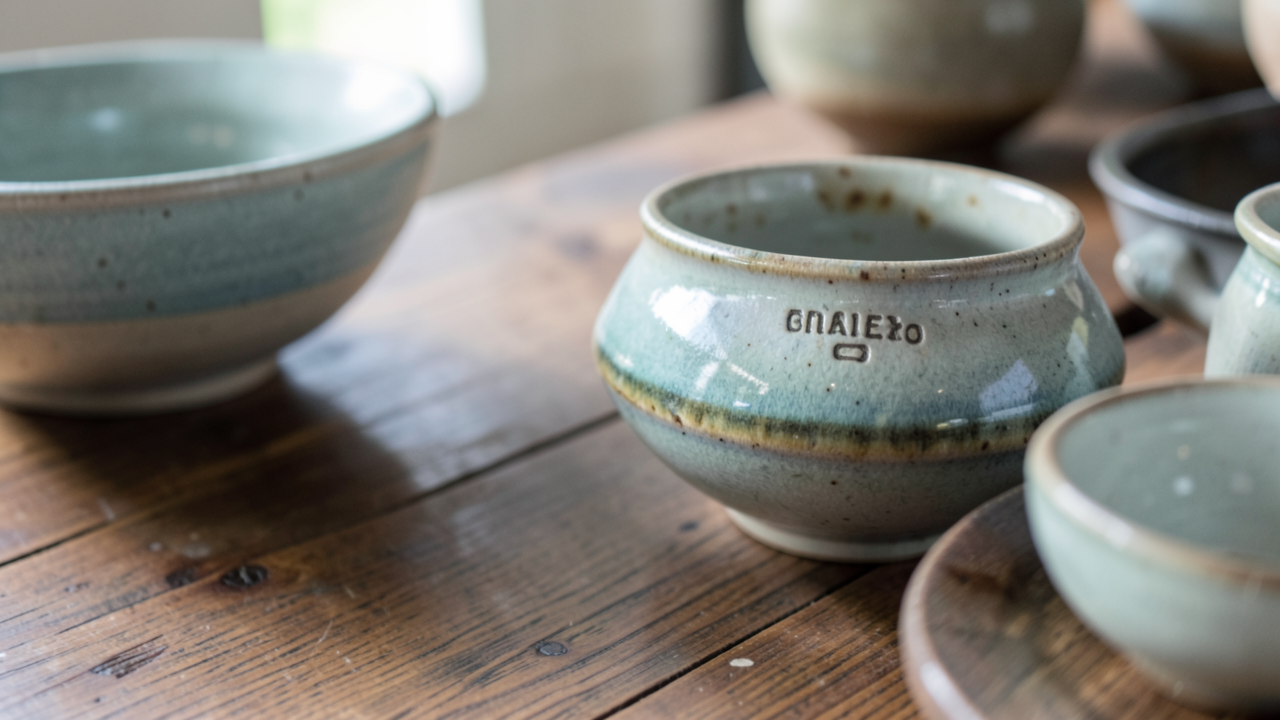
The glaze tells me a great deal. On fine pieces, I look for an even finish, subtle depth, and a surface that complements the form. Some glazes are glossy, others matte, and both can be excellent. What matters is consistency and control. Bubbles, crawling, pinholes, or patchiness may not always mean poor quality, but they deserve a closer look. In quality ceramics, the glaze usually enhances the object rather than hiding flaws.
Reading the body of the ceramic
The body, or clay structure, is another clue. I often lift a piece and judge its weight against its size. This is not about “heavier is better.” Instead, I look for refinement. A dense but elegantly made piece may feel substantial without being clumsy.
Earthenware, stoneware, and porcelain
Different ceramic bodies have different strengths:
- Earthenware tends to be more porous and often has a warmer, earthier feel.
- Stoneware is usually sturdier and less porous, making it practical and durable.
- Porcelain is often finer, more translucent, and prized for its delicate appearance.
When I handle a piece, I consider whether the material suits its purpose. A teapot, for example, should feel functional and stable. A decorative bowl should still show mastery of material and balance.
Sound and translucency
I sometimes tap a ceramic gently and listen. A clear ring can indicate good firing and density, especially in porcelain. This is not a rule that solves everything, but it can support other observations. If a thin porcelain piece lets light pass through slightly, that translucency often suggests careful production.
Why ceramic marks matter
Ceramic marks are one of the most useful tools for ceramic identification. They may include maker’s marks, factory stamps, signatures, country-of-origin labels, or impressed symbols. These marks can help you trace a piece’s maker, period, and sometimes even the workshop.
Where to find them
I usually check the underside first, then the base edge and any hidden surfaces. Marks can be painted, printed, impressed, or scratched in by hand. Some are clear and legible; others are partial or worn. A blurred mark is still worth recording, especially if you are comparing it with reference books or trusted databases.
What marks can and cannot tell you
A mark is helpful, but I never rely on it alone. Reproductions can carry fake marks, and some genuinely old pieces were made without any mark at all. A mark should support the other evidence: the clay body, glaze, form, decoration, and wear patterns. When these elements align, my confidence grows.
Decoration, craftsmanship, and detail
Decoration can reveal both skill and restraint. I am drawn to pieces where the painted, carved, or molded decoration feels integrated with the form. If the pattern looks rushed or inconsistently applied, I take that as a warning sign.
Hand-painted versus transferred decoration
Hand-painted decoration often shows tiny variations in brushwork. That does not mean flaws; in fact, slight differences can be a sign of handcraft. Transfer prints, on the other hand, tend to be more uniform. Neither is automatically better. What matters is whether the technique suits the piece and whether it has been executed with care.
Mold lines and finishing
I also inspect mold lines, joins, and seams. On well-finished ceramics, these may be minimized or skillfully concealed. Poor finishing around handles, lids, or applied ornaments can reduce both value and appeal. A well-made piece should look complete, not assembled in a hurry.
Signs of wear, repair, and age
A ceramic object with age often carries traces of use. That can be part of its charm, but I distinguish between attractive wear and damage that affects integrity.
Honest age versus damage
Light surface wear on the foot ring, slight glaze softening, or small scratches may simply reflect use. Chips, cracks, and poor repairs are another matter. I inspect repaired areas under light and from different angles. Old restorations can be acceptable in some cases, especially for rare objects, but they should be clearly understood before purchase.
What I avoid
I am cautious with pieces that show:
- Heavy overpainting that hides damage
- Hairline cracks running through the body
- Repaired handles or spouts on functional wares
- Inconsistent glaze around breaks or fills
- Marks that do not match the style or period of the object
Building confidence as a collector
If you are new to collecting ceramics, training your eye is the most valuable step. Handle as many pieces as you can. Compare ordinary objects with excellent ones. Visit galleries, museums, and reputable dealers, and take notes on what feels different.
My practical checklist
Before I buy, I ask myself:
- Does the form feel balanced and intentional?
- Does the glaze suit the body and shape?
- Are there clear, credible ceramic marks?
- Does the decoration show control and consistency?
- Is any wear compatible with the claimed age?
- Does the piece feel authentic rather than overly polished?
That checklist does not replace expertise, but it gives me a disciplined way to judge a piece.
A sharper eye for better pieces
Good ceramics reward close attention. The more I study them, the more I notice small differences in finish, proportion, and execution. Ceramic identification becomes easier when I trust my senses and compare what I see with reliable reference points. If you are choosing objects for a shelf, a dining room, or a growing collection, quality will usually announce itself through care, balance, and material honesty. I find that the best pieces do not need to shout; they simply hold up to scrutiny.
- Form and proportion are among the first signs of quality.
- Glaze consistency often reveals control and skill.
- Ceramic marks can support identification, but they are not proof on their own.
- Weight, sound, and translucency help assess the body and firing.
- Decoration and finishing should look deliberate, not rushed.
- Wear is acceptable, but damage and poor repair lower confidence.
- Practice and comparison sharpen your judgment over time.